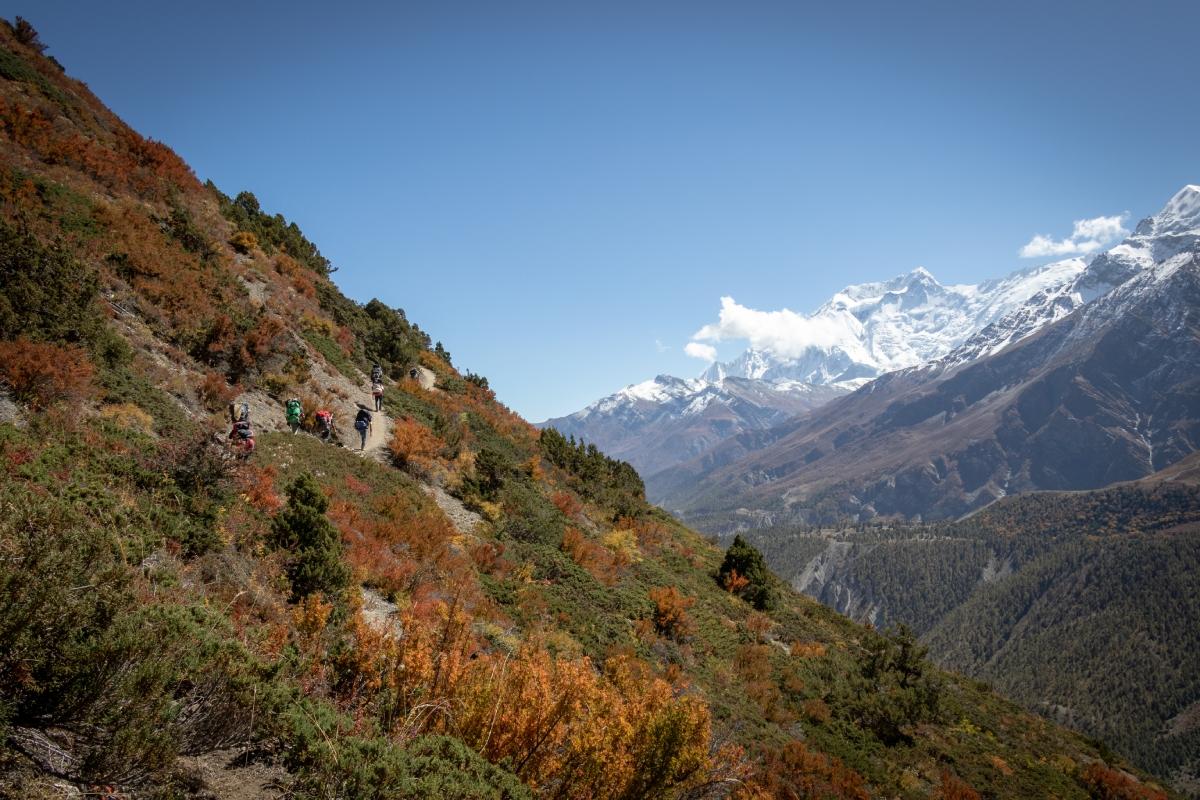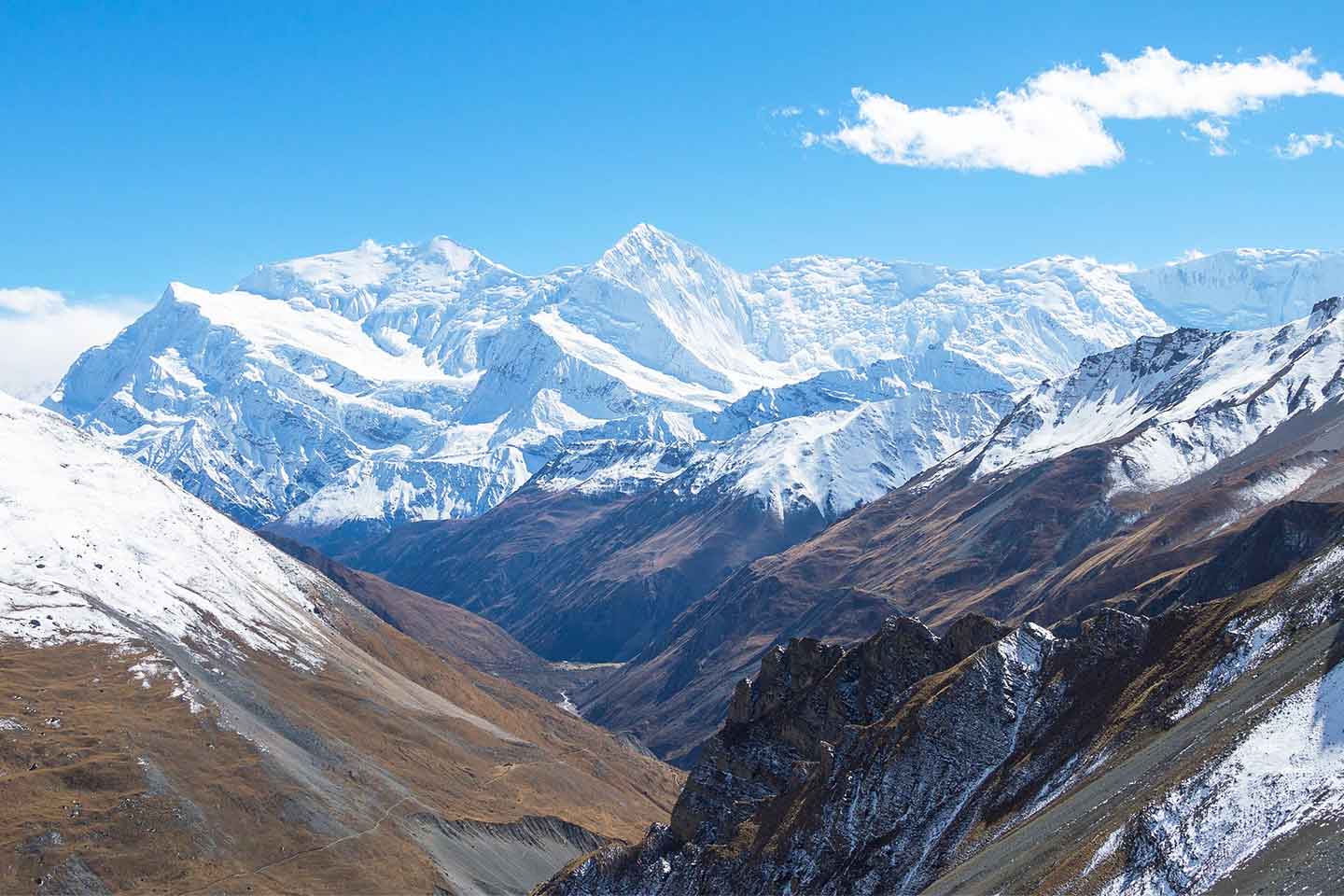
Autumn (Sep–Nov): the postcard season
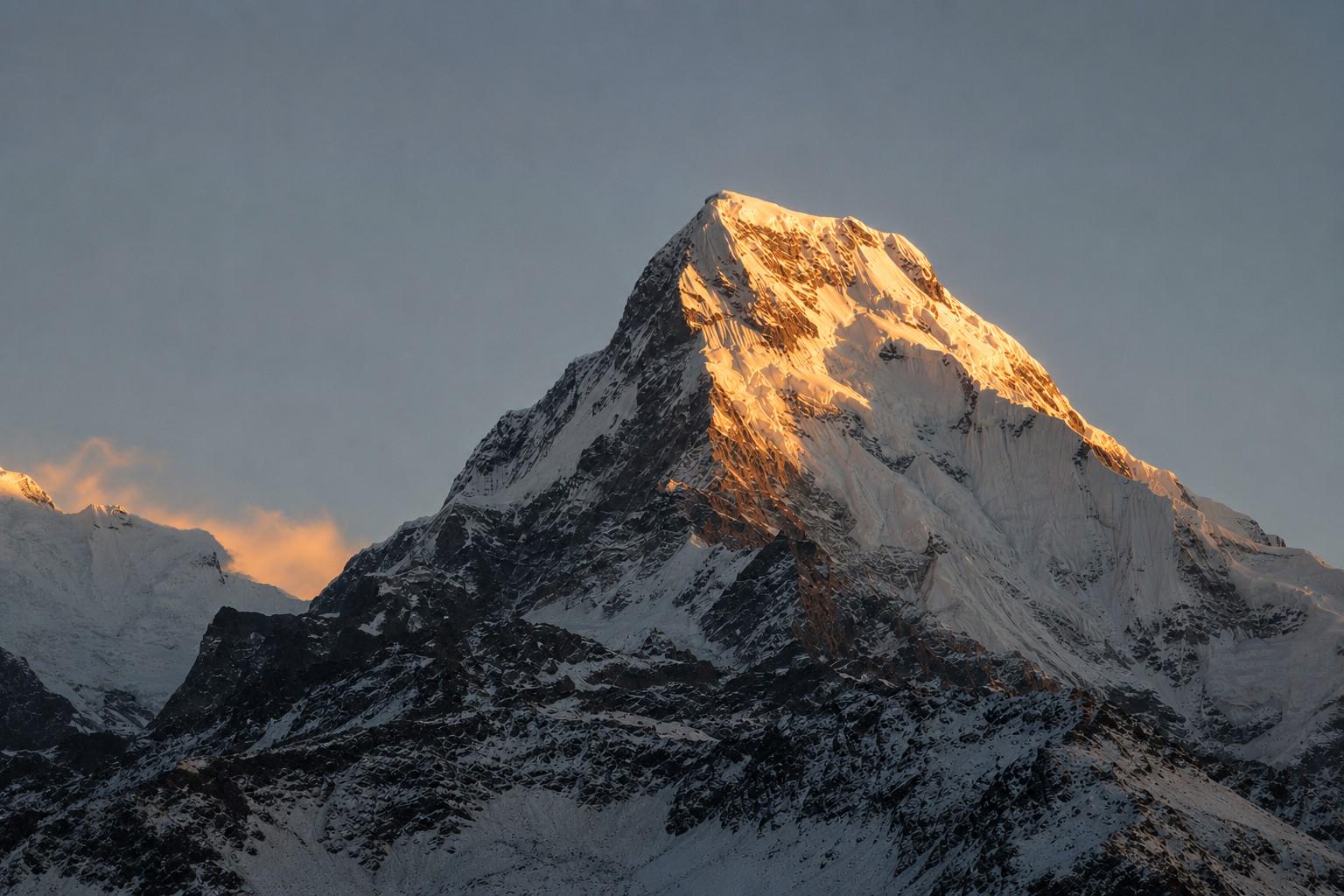
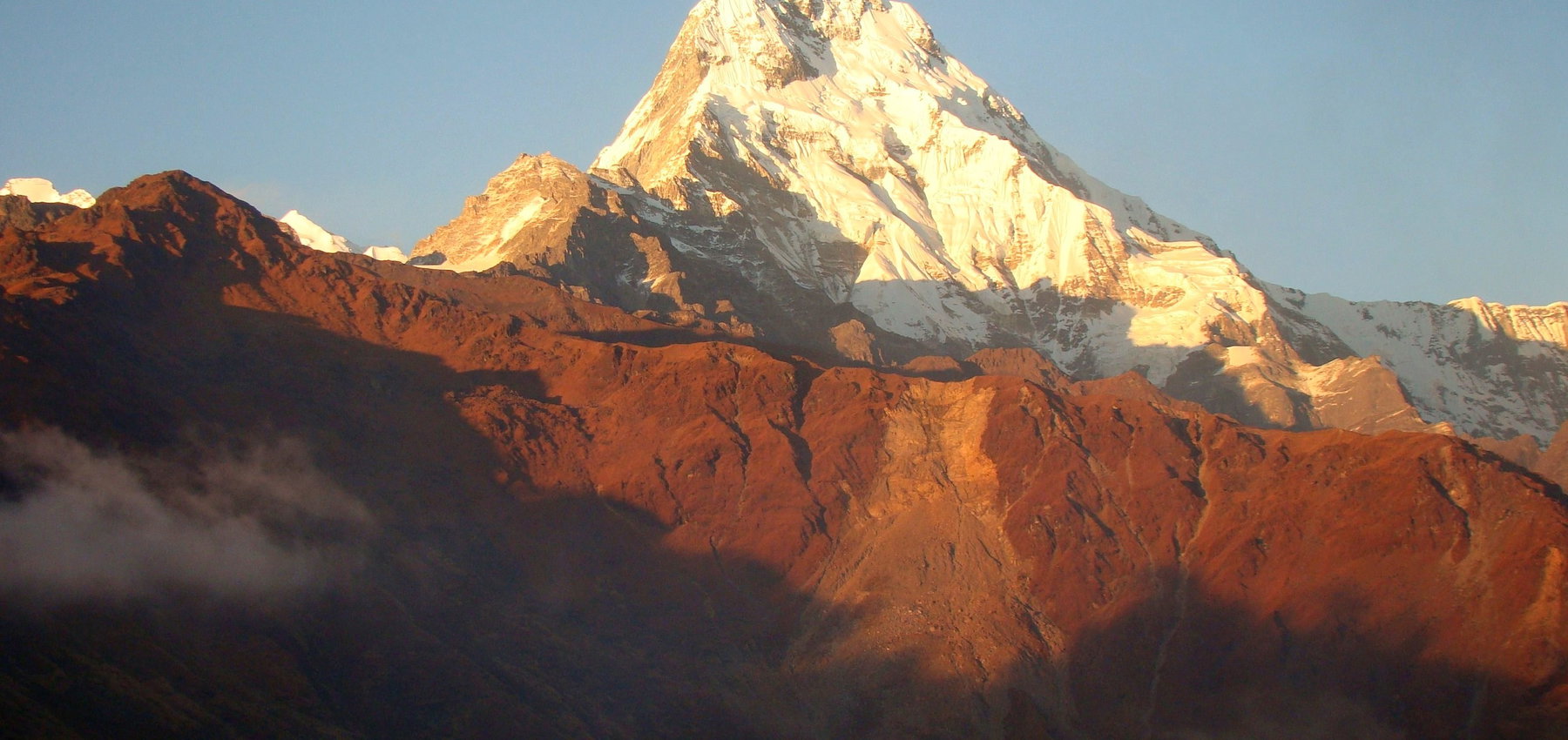
Monsoon washes the dust out, rice terraces go gold, and the air is at its clearest after mid-October. It's also peak season: book Lukla flights and permits 3–4 months ahead, expect teahouse buzz, and share sunrise viewpoints. Worth it — the mountain views are simply the year's best.
Spring (Mar–May): the second wave
Rhododendron forests at full burn from March, warming days, and expedition traffic toward Everest. The haze builds through April; by May the mornings are clear and afternoons soft. Spring suits late deciders — availability is better and the flora is the year's best.
Monsoon (Jun–Aug): green, quiet, leechy
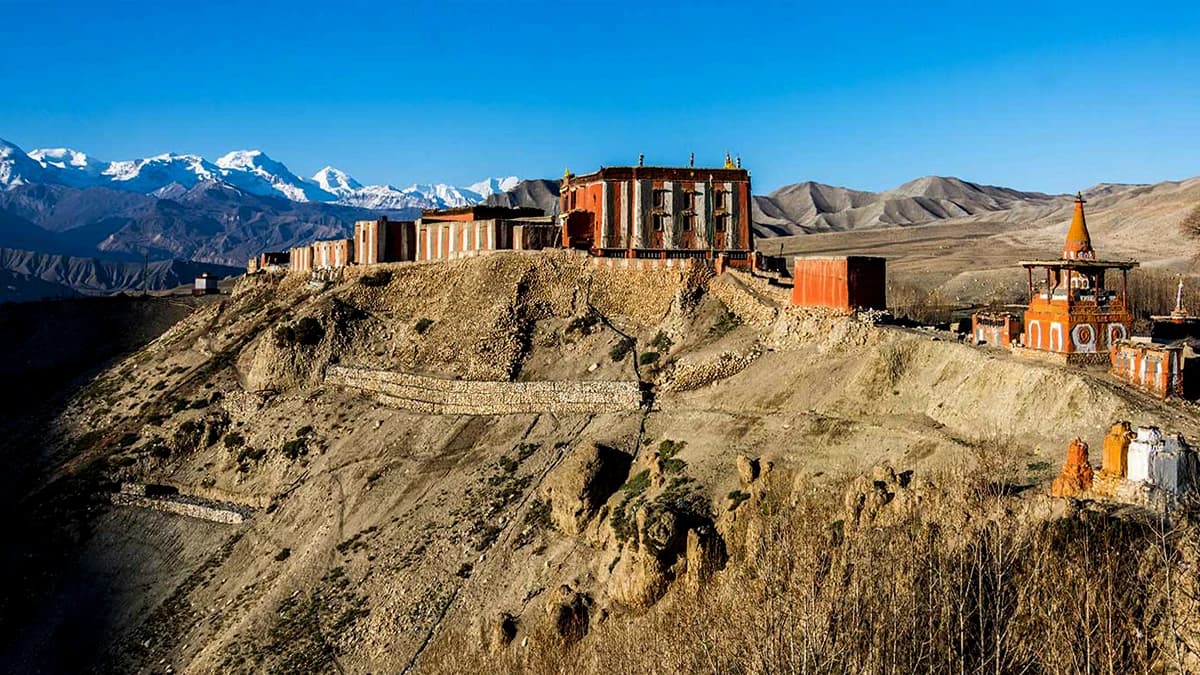
Rain falls mostly at night and in the afternoons; mornings are often workable. The high routes get slippery and cloud-bound, so we steer monsoon travellers to rain-shadow country — Upper Mustang and Upper Dolpo — where the season is actually prime. Everywhere else: half-price lodges, empty trails, explosive green.
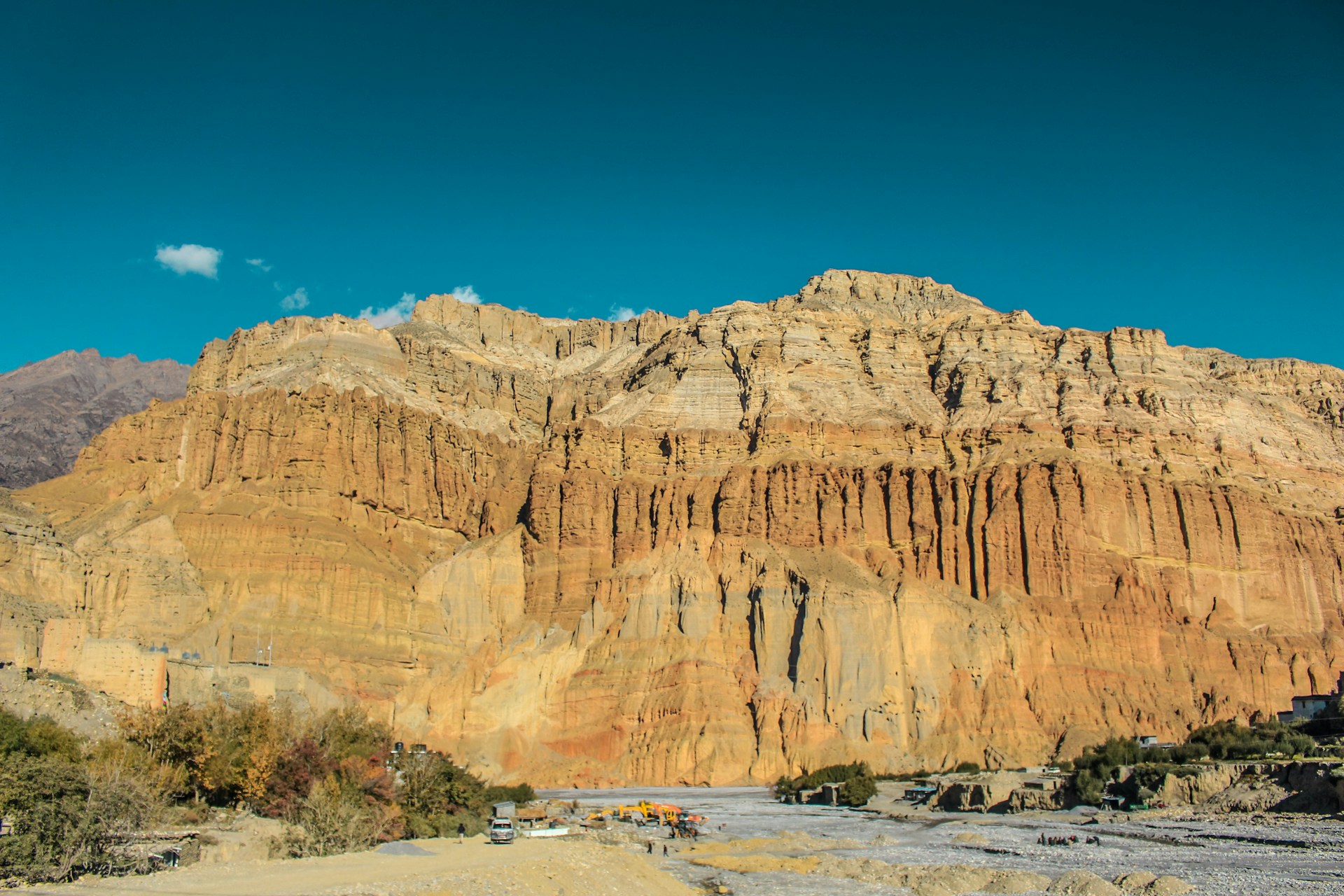
Winter (Dec–Feb): for the prepared
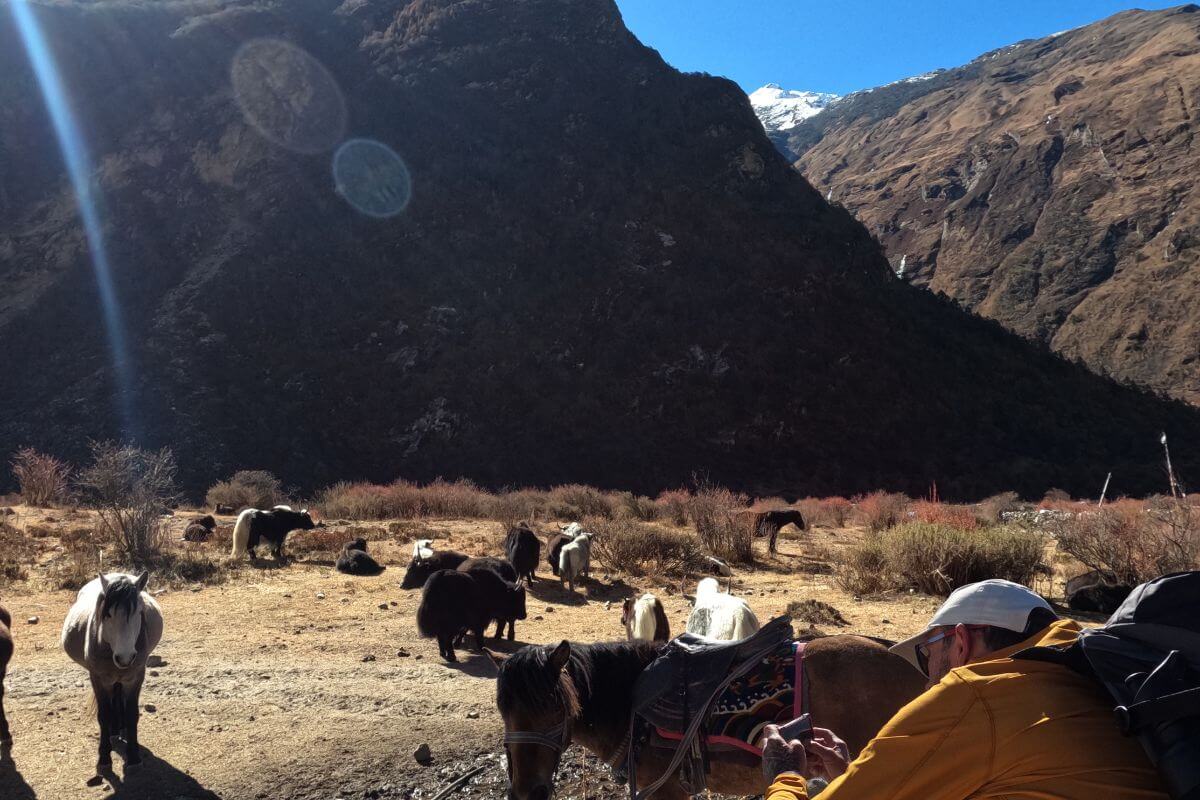
Cold, yes — but dry, crystal-clear and gloriously empty below the high passes. Poon Hill, Langtang and Everest View-type routes run all winter; the 5,000m+ passes close. If you can handle -10°C nights and want views without queues, January is the insider's month.
Trek it yourself